
Ormond Beach Address History Sources
The best starting source depends on the time in question. Modern previous residents research begins with the current VCPA parcel card. Older work moves through the Volusia Clerk’s deeds, telephone and city directories, census schedules, maps, and local newspaper or probate evidence. Coverage overlaps unevenly, so gaps should remain marked as gaps.
| Source | Verified years | Where accessed | What it can show |
|---|---|---|---|
| Official Records web | 4/4/1988-present | Volusia Clerk inquiry | Grantor, grantee, document, legal description, image |
| Recorder research media | 1887-present | DeLand Room A121 | Older deeds, mortgages, easements, liens, and plats |
| Telephone directories | 1939-1954 verified | Library of Congress digital items | Subscriber, address, phone, locality |
| Polk/area directories | 1930 verified; other leads need catalog check | Libraries and catalogs | Resident, address, often occupation |
| Sanborn maps | 1921 and 1931 | Library of Congress | Building footprint, material, use, street context |
| Federal census | Released through 1950 | NARA and library databases | Enumerated household, relationships, ages, occupations |
| City permits | Contemporary; cutoff unconfirmed | Tyler or city request | Scope, owner or contractor, work dates |
A source can establish ownership without occupancy, or occupancy without title. Keep those findings in separate columns until another record links them.
Start With Today’s Ormond Parcel
Search the address in the Volusia County Property Appraiser portal. Record the current owner, exact situs, mailing address, short parcel ID, alternate key, legal description, subdivision, block, lot, and any deed or sale reference. The legal description is crucial because it stays tied to land when a street string changes. Situs means physical location; tax mailing is simply where notices go.
Open the sales and deed references, but read them as leads. An owner may not live at the parcel, and a resident may never appear on the deed. Homestead plus matching situs and mailing addresses gives stronger owner-occupancy evidence, yet still does not identify a whole household. For the current address chain in full, use the Ormond Beach street directory.
Reverse the Volusia Deed Chain
The chain of title is the sequence of recorded transfers for the same land. Start with the newest purchase deed and walk backward through sellers. Match the lot, block, subdivision, or other legal description at every turn. A similar owner name or street address is not enough.
- Use the VCPA parcel record to find the present owner and latest sale or deed reference.
- Open that conveyance in Volusia Official Records by instrument number or book and page. Confirm grantor, grantee, execution and recording dates, and legal description.
- Search the seller, who is the grantor on the current deed, as a grantee in an earlier date range.
- Open the earlier purchase and match the same legal description. Repeat the seller-to-prior-purchase step.
- At the web cutoff, continue at the DeLand research room using terminals, microfilm, digital images, and plat references.
- Grantor
- The party transferring an interest in land.
- Grantee
- The party receiving that interest.
- Chain of title
- The linked sequence of conveyances for one parcel.
- Legal description
- The durable land description, often based on subdivision, block, lot, or surveyed boundaries.
Deeds prove a conveyance. They do not by themselves prove that the grantor or grantee lived in the house.
Cross the Ormond Beach Web Cutoff
Released Official Records indexes and images begin online on April 4, 1988. The DeLand Recording Department’s public research media reach back to 1887. Historical books may require an appointment at 386-736-5912. Web prints are free; Clerk certification is $1 per page plus $2 per document. Staff can show how to use the equipment but cannot perform a title search.
The official coverage page explains that divide. View the Volusia Clerk historical Official Records information before planning an older search.
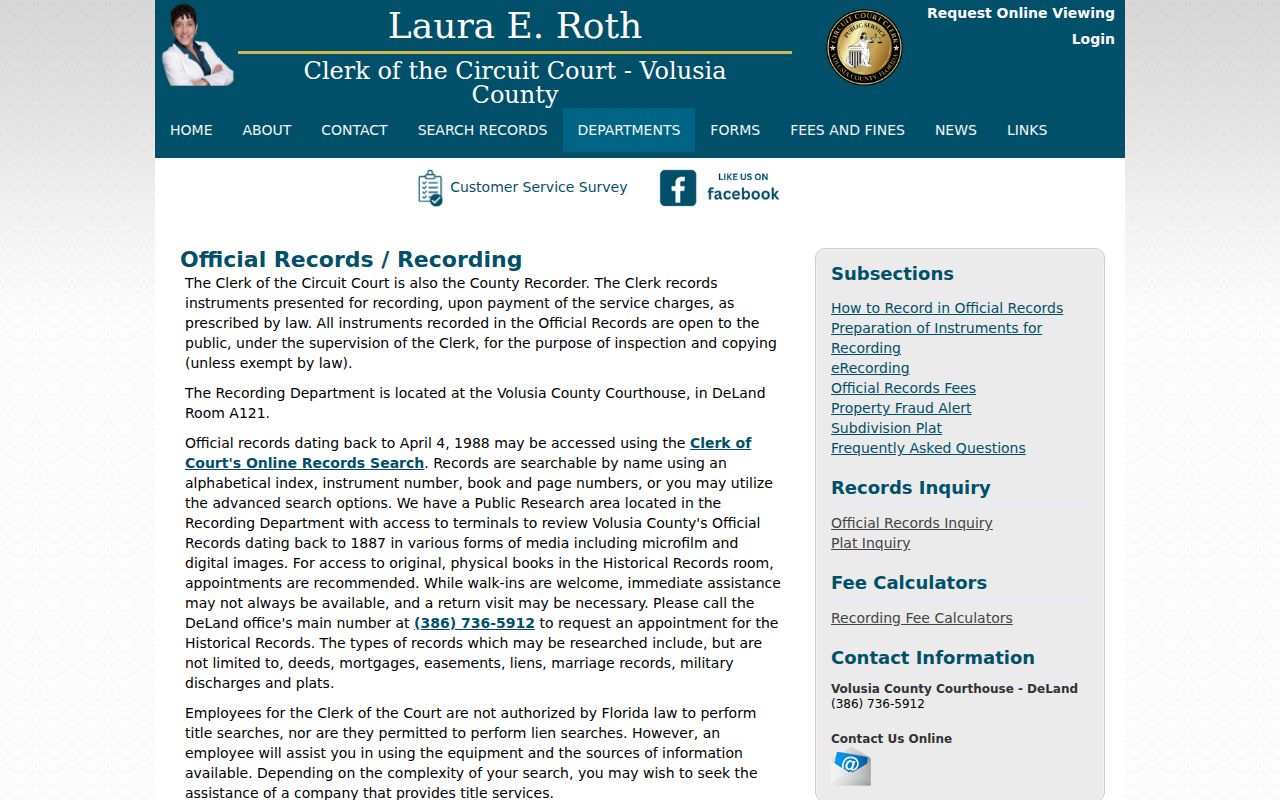
The image is a reminder that a blank online result after the cutoff requires an offline search, not a conclusion that the trail ended.
Pair Ormond Directories and Census
Directories fill years between federal census schedules. Verified telephone volumes include Ormond from November 1939 through December 1947 and Ormond or Ormond Beach from June 1948 through December 1954. The digitized 1948 book can show a subscriber’s name, a residence marker, abbreviated street, locality, and telephone number. Polk’s 1930 Greater Daytona directory is also securely documented. Other Ormond year leads must be confirmed in a library or State Library catalog before use.
- Search both “Ormond” and “Ormond Beach,” plus the Greater Daytona title when the year calls for it.
- Transcribe the address, name, abbreviations, locality, and publication year exactly.
- Compare the edition before and after it. First and last appearances set a range, not a precise move date.
- Pair the range with the 1930, 1940, or 1950 federal household when one is available.
- Record differences rather than merging similar names. A directory subscriber, deed owner, and census resident may be three different roles.
The 72-year rule makes 1950 the newest released federal decennial census; 1960 is due in 2032. The 1890 schedules are almost wholly lost nationwide. The surviving 1885 Florida state census can sometimes help bridge the 1880 to 1900 gap, but Volusia coverage must be confirmed.
Read Ormond Beach Map Clues
Library of Congress records verify Ormond Sanborn fire-insurance maps from November 1921 and August 1931. They show building footprint, construction material, use, and street context. They do not name occupants. A map can tell whether the same structure was present between a deed and a directory entry, or whether a later permit likely concerns a replacement building.
Use the parcel legal description to orient the sheet, then compare street position and nearby landmarks. Historic Ormond developed along the Halifax River before later beachside and subdivision growth. Older records may use Ormond, a Greater Daytona heading, precinct wording, or an unincorporated description rather than today’s mailing city.
Date Ormond Beach Building Changes
Tyler Civic Access accepts an address, parcel number, or permit number and returns public application, permit history, and status details. A file may identify the owner or contractor, scope, application date, issue date, final date, and sometimes construction value. That can explain why a map footprint changed or why an address first appears in a later directory.
When the portal has no older file, request it from the Ormond Beach Building Division or City Clerk. Planning can provide zoning or land-use context. Code history may need a separate city request because no complete historical public case search was confirmed. Treat permit and code records as evidence about the site, not proof of the previous residents.
Ormond Beach Names Changed
Historic searching must include both Ormond and Ormond Beach. Greater Daytona titles can contain Ormond listings even when the cover does not highlight the city. Rio Vista and other period neighborhood terms may also matter. The mainland and barrier island sit on opposite sides of the Halifax River, while an Ormond Beach postal address can extend beyond the incorporated city into Ormond-by-the-Sea.
Address continuity becomes especially tricky with condominiums, subdivisions, trusts, and out-of-area mailing addresses. Compare parcel identity and legal description before treating two street entries as the same home. The most honest result may be “listed here by 1948 and absent by 1950.”
Close an Ormond Beach Household Trail
Obituaries, cemetery records, and probate can explain why a past owner disappears or why heirs later convey the parcel. The Volusia court portal may identify a decedent, personal representative, and public filings involving heirs or creditors. NewsBank, HeritageHub, and Daytona-area newspaper microfilm are the main library routes for notices and obituaries. Exact newspaper coverage years should be checked with staff.
Oak Ridge Cemetery has served the Black community since the early twentieth century, according to city records. Hillside Cemetery is on the city landmarks inventory, and Pilgrim’s Rest Primitive Baptist Church dates to about 1879. No official comprehensive online interment index was found, so contact the keeper or use local historical material rather than assuming silence means no burial.
Ormond Beach Regional Library can direct local queries, while Daytona Beach Regional Library has the county system’s strongest genealogy collection and librarian. Branch-only Ancestry Library Edition differs from remotely available HeritageQuest and NewsBank for valid cardholders.
Unclaimed Property as a Lead
Florida Treasure Hunt is an official statewide name search. An old address or surname match can add a dated clue when a person’s later path is unclear, but a claim requires proof and the result does not establish former residence by itself.
Open the Florida Treasure Hunt name search shown below only after the deed, directory, or probate trail provides an exact person.
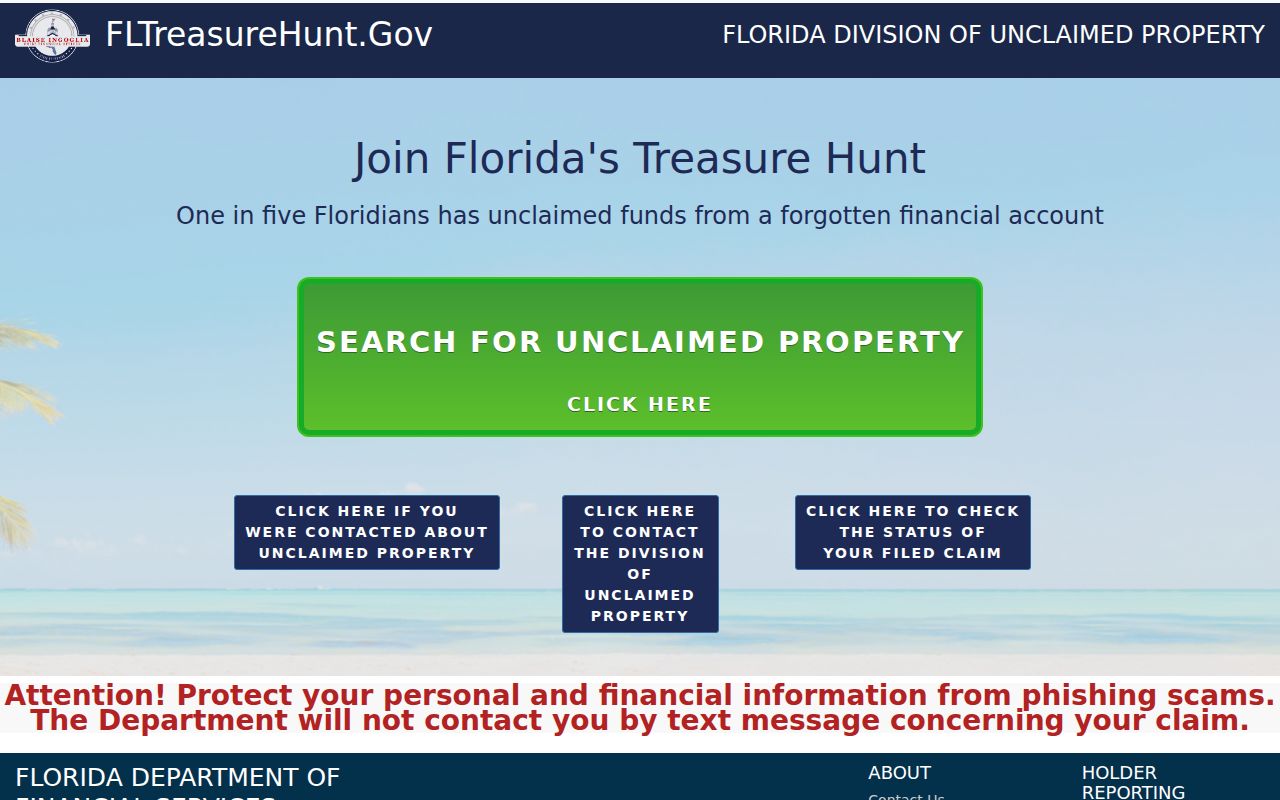
Use any match as a pointer to corroborate, not as a substitute for the address-linked record.
Limits on Previous Residents Research
Past owners and previous residents are different sets. A deed can omit renters and family members. A telephone book often lists one subscriber. Census enumeration may miss or misstate a person. Obituaries can contain family-supplied errors. Protected or sealed records remain unavailable, and later republished data can stay wrong after an official source changes.
Lawful use. Research previous residents for house history, genealogy, heir questions, or personal curiosity. Do not use the trail to locate, stalk, harass, intimidate, or harm a living person.
Preserve a worksheet with one row per date and separate columns for source, exact name, party role, situs, mailing address, legal description, and uncertainty. That method prevents a tax owner, phone subscriber, and deed grantee from being silently merged into one person.